
colateral

Reserve Bank of Zimbabwe launches Bsystem Ghana’s Collateral Registry System to boost economic growth

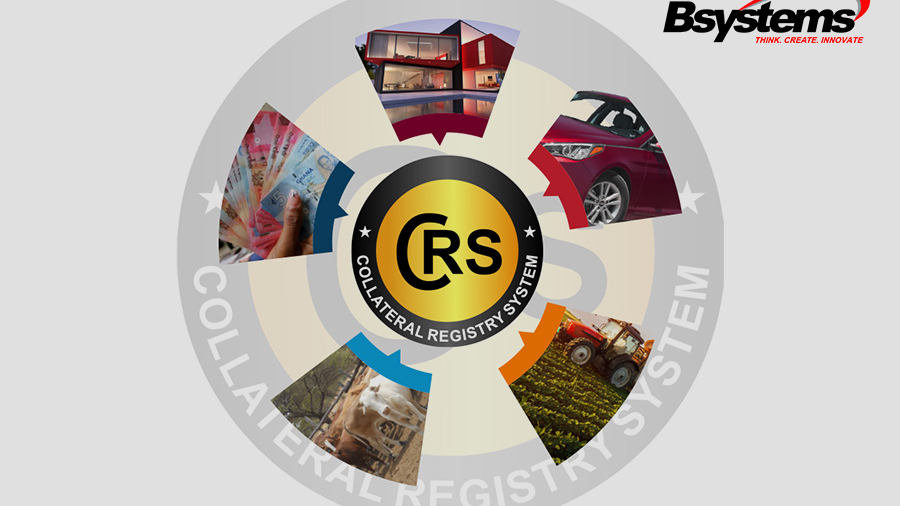
Zimbabwe’s central bank, the Reserve Bank of Zimbabwe (RBZ), has officially launched its newly established online Collateral Registry System developed by the leading Ghanaian software company, Bsystems.

The live activation of the Collateral Registry System by the central bank of Zimbabwe forms part of the bank’s move to improve the ease of doing business in the country through disclosing information by borrowers/debtors aimed at encouraging micro-credit growth and enhanced credit risk management in the microfinance sector.

This is also under Zimbabwe’s Movable Property Security Interest Act 2020 (Chapter 14:35), which specifies that the Registry facilitates commerce, industry, and other socio-economic activities by enabling individuals and businesses to utilize their movable property as collateral for credit.

Speaking during the launch in Harare on Friday at a brief ceremony, the Governor of the Reserve Bank of Zimbabwe, Dr. John Mangudya, noted that the establishment of the Collateral Registry is in response to the Zimbabwe Banking and Financial sector to support economic growth and development as enshrined in the nation’s development strategy number one which is also in line with the vision of the upper and middle-income countries by the year 2030.

“Going forward, there is the need to intensify the awareness campaigns to reach out to various stakeholders in the country to conscientize the public about this good news of collateral registry established here in Zimbabwe in terms of the law of this country,” he said.

Governor Dr. Mangudya expressed the central bank’s appreciation to software system supplier, Bsystems from Ghana for developing a Collateral Registry System to the bank’s expectations.

“We look forward to continuing support during the implementation stage of our collective efforts to improve our credit infrastructure,” he added.

In his remark, the Chief Executive Officer of Bsystems Limited, Thomas Baafi, said Bsystems has, over the years, blazed the trail of developing top-notch cutting-edge IT-based business solutions, including the Electronic ID Verification, Smart HR and Payroll, and PeoplePay, a mobile payment platform.

According to him, introducing the collateral registry through a digital platform will allow many Zimbabweans to access its services in real time using their phones or computers.

Mr. Baafi then lauded officials of the Reserve Bank of Zimbabwe (RBZ) for their immense support in getting the online Registry to go live.

The Registry is an online public database that allows financial institutions to register security interests in movable property and mitigate the risk to customers. With the introduction of the collateral registry, banks should be able to diversify their credit portfolio from mostly corporates to include small and medium enterprises.

A web-based system offers remote access beyond regular business hours without visiting the registry office. With this system in place, officials of the Registry are free from operations that involve paperwork, manual reviews, and searches. Storage costs are also significantly reduced.

The online Registry facilitates the electronic registration of information on movable collaterals submitted through registration forms; it entails rules for creating a security interest, practical procedures, and protection in case of default, including enforcement and repossession. The system allows lending institutions and the general public to conduct searches on registered notices, collaterals, and other ancillary functions.

The Bsystems Collateral Registry System software solution has been adopted by the Central Banks and Registrar General’s Department of nine other African countries, including Ghana, Nigeria, Liberia, Malawi, Zambia, Sierra Leone, Uganda, Ethiopia, and Mozambique. The rollout of the collateral registry software solution in Zimbabwe brings to ten (10) the number of African countries that are currently enjoying the benefits of the Bsystems Collateral Registry System.

images-69

IFC Announces New Landmark Investments to Support Smaller Businesses and Advance Job Creation at 2025 Africa Financial Summit

Casablanca, Morocco, November 4, 2025 — IFC has announced investments totaling $310 million in projects that will support the growth of smaller businesses and job creation across several African countries. The projects were announced at the Africa Financial Summit (AFIS), which convened private and public sector representatives from across Africa under the theme of mobilizing domestic capital at scale for development.

The two-day event, co-hosted by IFC, the Jeune Afrique Media Group, and the Kingdom of Morocco, featured discussions among African central bank governors, regulators, financial institutions, and fintech innovators on how Africa can best tap its own resources—and attract more foreign investment—to shape the continent’s financial future, create jobs, and sustainably grow its economies.

On the sidelines of AFIS, IFC announced partnerships with several financial institutions that will channel funds and support towards businesses in Egypt, Ethiopia, and Morocco, helping businesses grow and reach new markets.

The new projects IFC announced are:

· A $50 million financing package to Suez Canal Bank will expand lending to smaller businesses across Egypt, particularly in underserved regions. A quarter of the loan is earmarked for women-owned businesses to help bridge the gender financing gap and boost inclusive growth.

· A $10 million equivalent IFC local-currency risk-sharing facility with Attijariwafa Bank Egypt to expand access to finance for smaller businesses and support job creation. At least a quarter of the loans are earmarked for women-owned businesses, and half to SMEs in vulnerable communities. The initiative is supported by the Prospects Partnership, which supports development for host communities and forcibly displaced people.

· A $250 million IFC risk-sharing facility with newly established Saham Bank will strengthen Morocco’s financial stability and expand access to finance for local businesses. IFC will share up to 50 percent of the credit risk on the bank’s $500 million corporate loan portfolio, helping sustain lending to key sectors. Saham Bank recently acquired Société Générale Marocaine de Banques.

· An IFC advisory services support program for VisionFund to help the microfinancier expand lending to smaller businesses and deepen financial inclusion in Ethiopia. The project will strengthen VisionFund’s capacity in strategic business planning, risk management, and responsible finance, enabling it to reach more underserved entrepreneurs—especially women. This initiative follows IFC’s recent $10 million local currency loan to VisionFund.

Ethiopis Tafara, IFC’s Vice President for Africa, said, “The combination of Africa’s own financial resources with strategic international capital is a potent recipe for growth on the continent. Africa’s entrepreneurs are building companies that rival any in the world—and with the right support, they can grow and create the jobs and opportunities Africa needs. These projects underscore the power of partnerships as well as the important role of events like AFIS in bringing together like-minded organizations for development and impact.”

AFIS was established in 2021 to promote a shared understanding among public authorities and private sector leaders of the trends and risks shaping the continent’s financial industry. Through open dialogue and collaboration, AFIS helps identify opportunities for improvement, whether through regulatory reforms or market-driven initiatives.

This year’s event brought together more than 1,250 senior leaders from Africa’s financial sector—including those who manage Africa’s savings with those who can channel international investment—with the aim of delivering more funds to job-creating African businesses and projects.

Over the past two decades, IFC has collaborated with more than 300 financial institutions across 40 African countries to enhance banking systems, expand access to finance, and mobilize private capital. This partnership has helped build the foundations for opportunity—fueling enterprise, enabling jobs, and driving the continent’s next generation of growth.

About IFC

IFC — a member of the World Bank Group — is the largest global development institution focused on the private sector in emerging markets. We work in more than 100 countries, using our capital, expertise, and influence to create markets and opportunities in developing countries. In fiscal year 2025, IFC committed a record $71.7 billion to private companies and financial institutions in developing countries, leveraging private sector solutions and mobilizing private capital to create a world free of poverty on a livable planet. For more information, visit www.ifc.org.